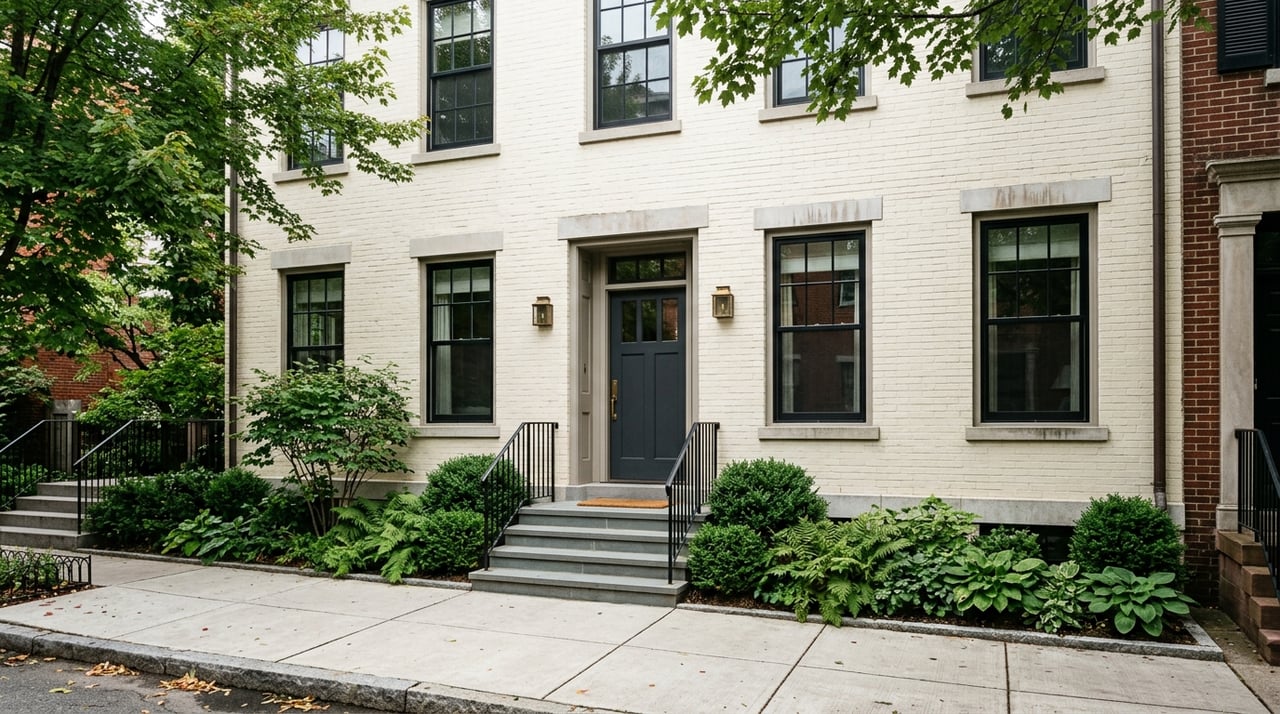
If you’re wondering whether Brookline can really work without a car, the short answer is yes, in the right part of town. For many buyers and renters, the bigger question is what daily life actually feels like when you’re relying on walking, transit, and the occasional ride instead of keeping a car parked outside. In Brookline, that experience can feel surprisingly easy, especially near the town’s most connected village centers. Let’s dive in.
Why Brookline Works Car-Free
Brookline stands out because it offers unusually strong transit access for a suburb. The town points residents to the MBTA Green Line as the best way to get around, with the C branch running along Beacon Street and the D branch connecting places like Brookline Village, Reservoir, and the Longwood Medical Area.
Beyond rail service, Brookline also lists MBTA bus routes 51, 60, 65, and 66, along with Bluebikes and Zipcar for bike-share and occasional car use. That mix gives you more than one way to handle commuting, errands, or plans that do not fit neatly on a train schedule.
There is also a real local culture around walking and transit. Brookline’s Complete Streets policy prioritizes walking, biking, wheelchair access, and mass transit, which tells you something important about how the town plans its streets and public spaces.
Where Car-Free Living Feels Easiest
Not every part of Brookline feels the same without a car. The town’s own planning materials make a clear distinction between north Brookline and south Brookline, with the north offering the most pedestrian activity and transit access and the south tending to be more car-dependent.
In practical terms, car-light living is usually easiest near Beacon Street and the Longwood corridor, and around places like Coolidge Corner, Brookline Village, Washington Square, St. Mary’s, and JFK Crossing. These are the areas the town identifies as core commercial centers, with walking routes that connect shops, services, parks, civic buildings, and transit.
That matters because Brookline does not revolve around one big downtown. Instead, it functions more like a series of compact village centers, which can make daily life feel efficient if you live near one of them.
What Daily Errands Feel Like
One of the biggest advantages of living in Brookline without a car is that many errands can be combined into one short trip on foot. If your home is close to a village center, you may be able to pick up groceries, stop at the library, grab coffee, and catch the Green Line without needing to plan your day around driving.
That kind of routine is a big part of Brookline’s appeal. Rather than spending time getting in and out of a car for every small task, your day can feel more connected and more local.
For some people, that creates a lifestyle that feels closer to an urban neighborhood than a traditional suburb. At the same time, Brookline still maintains a more residential feel overall than many denser Boston neighborhoods.
Transit Is Part of the Rhythm
In Brookline, transit is not just a backup option. In the best-connected areas, it becomes part of the normal rhythm of daily life.
The C branch serves stops along Beacon Street through places like Coolidge Corner and Cleveland Circle. The D branch links Brookline Village and Reservoir with the Longwood Medical Area and other destinations. If you work in Boston or Longwood, this can make commuting feel much more straightforward than you might expect from a suburb.
There is also a helpful middle ground between fully car-free and fully car-dependent. Brookline specifically points residents to Zipcar for occasional driving needs, which can make it easier to live without owning a vehicle full time.
Brookline Is Built for Walking
Brookline’s planning documents do more than mention walkability as a nice feature. They treat pedestrian routes and transit approaches as priority areas for improvement, especially around the major commercial districts.
That focus shapes the lived experience. In the most walkable parts of town, sidewalks, intersections, and connections between destinations matter because they are being used every day by people heading to shops, parks, transit stops, and local services.
This helps explain why Brookline supports a meaningful share of households without a car. According to an ACS-based community indicator, 28% of Brookline households lacked vehicle access in 2017 to 2021. That is notably higher than Newton at 6% and closer to places where car-light living is a more established pattern.
Green Space Still Feels Accessible
Living without a car can sound practical, but people also want to know if it feels enjoyable. In Brookline, access to parks and open space is part of what makes the lifestyle feel balanced.
The town describes its park system as substantial and diverse, with a legacy of parks and open space despite Brookline’s urban character and its proximity to Boston. That matters because car-free living feels very different when green space is part of your everyday environment rather than something you have to drive to reach.
Brookline Reservoir Park is one clear example. It is a 32-acre park with about a one-mile walking and jogging loop around the water, offering an easy option for fresh air and exercise close to daily life.
Larz Anderson Park offers a different experience at a larger scale. At more than 65 acres, it is Brookline’s largest park, and town materials note pedestrian paths, stairs, historic bridges, a carriage road, and a perimeter loop path as part of the park landscape.
The Emerald Necklace also extends into Brookline, giving residents access to a larger regional green corridor. For many people, that means car-free living here is not just about reaching work or errands. It is also about being able to walk to meaningful open space.
Housing Types Support the Lifestyle
Brookline’s housing stock is one reason car-light living is realistic in the first place. The town’s 2024 Housing Production Plan reports 28,274 dwelling units, with about 95% occupied and a 4.8% vacancy rate.
Just as important, the plan explains that Brookline includes many apartments and condos near transit, rather than only detached homes. It also notes that older multifamily rental buildings have been converted to condominiums over time and that newer approvals have added both market-rate and affordable rental choices.
For buyers or renters who want a more walkable, transit-connected lifestyle, that variety matters. In Brookline, the housing options are better matched to a car-light routine than in towns where the housing stock is more heavily oriented toward low-density single-family neighborhoods.
How Brookline Compares With Newton and Wellesley
If you are comparing Brookline with other nearby towns, it helps to think about where it sits on the spectrum. Brookline is expensive, but ACS-based profiles place its median home value at about $1.06 million, compared with about $993,000 in Newton and about $1.58 million in Wellesley.
That pricing helps frame Brookline’s value proposition. It is often closer to Newton in price, while offering denser transit access and more village-style daily convenience than Wellesley.
Newton is also village-based, with 13 distinct village centers and multiple transit options, including seven Green Line D stops, three commuter rail stations, and more than 10 bus lines. Wellesley has commuter rail, regional bus service, and microtransit, but its car-light pattern is more tied to rail access and rider parking.
Brookline feels different because its transit stations are embedded directly into the village fabric. That can make the everyday experience feel more seamless if your goal is to walk out the door, run errands, and catch transit without a car being central to the plan.
The Honest Trade-Offs
Brookline can absolutely support life without a car, but the experience is not uniform across town. The strongest fit is usually in the northern, transit-rich villages and near Beacon Street, Brookline Village, Washington Square, or Longwood.
If you move farther south into lower-density areas, daily life can become more car-oriented. That does not make those neighborhoods less appealing. It just means they may suit a different routine and set of priorities.
For many people, the best way to think about Brookline is this: the northern part of town can feel like an urban district for day-to-day living, while the town as a whole still feels calmer and more residential than many Boston neighborhoods. That balance is a big reason Brookline continues to stand out.
If you’re weighing Brookline against Newton, Wellesley, or another nearby town, the right choice often comes down to how you want your days to work. If walkability, transit access, and village-centered convenience are high on your list, Brookline deserves a close look. If you’d like tailored guidance on where that lifestyle fits best, Emily Farrar offers thoughtful, discreet support for buyers exploring Brookline and nearby communities.
FAQs
Is Brookline, MA a good place to live without a car?
- Yes. Brookline can work well without a car, especially in the northern part of town near Green Line stops and village centers like Coolidge Corner, Brookline Village, and Washington Square.
Which parts of Brookline are best for car-free living?
- The most practical areas are generally north Brookline, the Beacon Street corridor, Brookline Village, Washington Square, St. Mary’s, JFK Crossing, and areas connected to Longwood.
Does Brookline have good public transportation?
- Yes. Brookline is served by the MBTA Green Line C and D branches, along with bus routes 51, 60, 65, and 66. The town also points residents to Bluebikes and Zipcar for added flexibility.
How common is living without a car in Brookline?
- An ACS-based community indicator reported that 28% of Brookline households lacked vehicle access in 2017 to 2021, which suggests car-light living is a meaningful part of the local pattern.
Is Brookline more walkable than Newton or Wellesley?
- Brookline’s transit-rich northern villages often support a more seamless car-light lifestyle than Wellesley, and Brookline has a higher share of households without vehicle access than Newton based on the data in the research report.
Does Brookline have parks you can reach without driving?
- Yes. Brookline has a substantial park system, including places like Brookline Reservoir Park and Larz Anderson Park, and the Emerald Necklace also extends into Brookline.