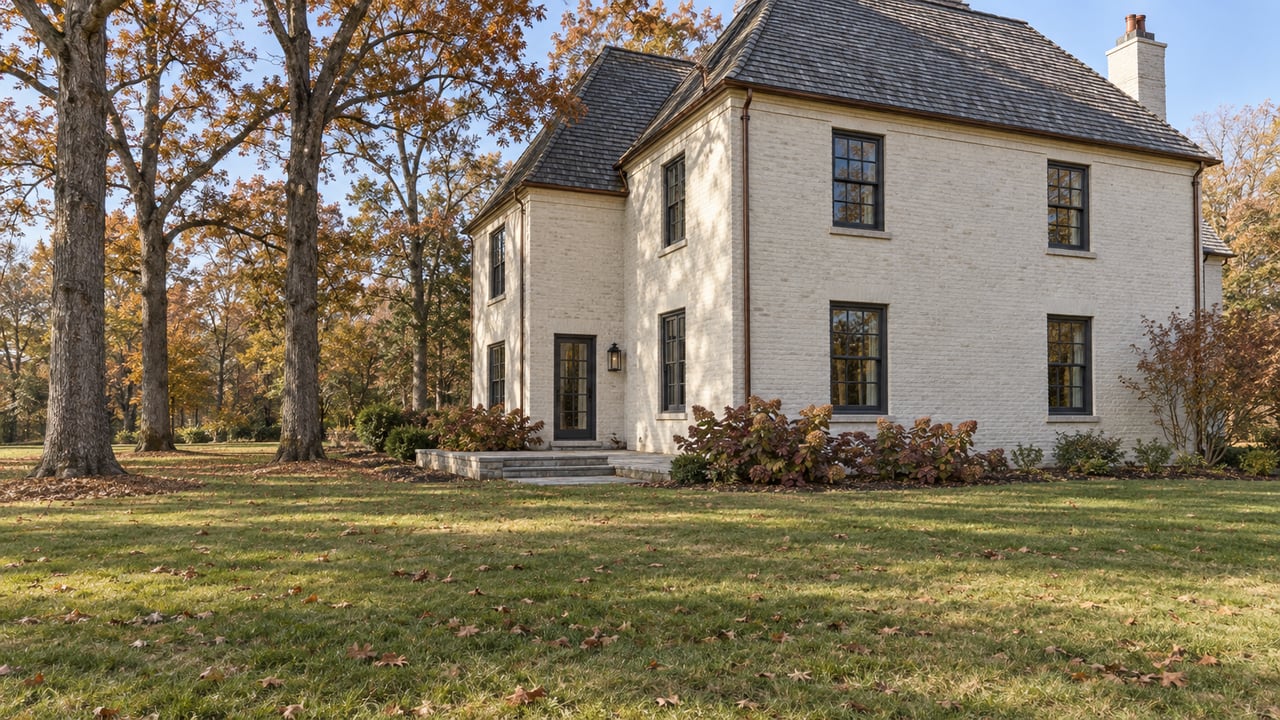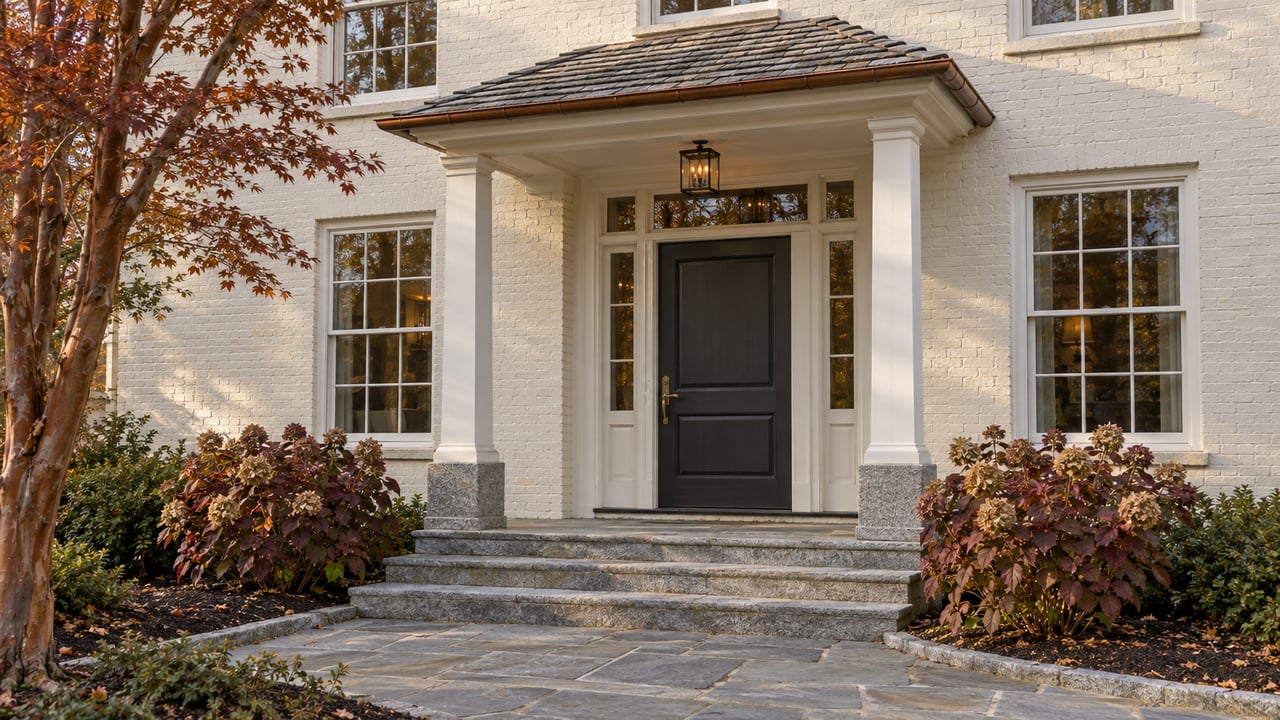
The first finished housing project under Newton's village center rezoning was a house at 424 Newtonville Avenue. It was built around 1908 as a three-family home and was converted into four units. The city recorded a certificate of occupancy for it, so the project added one net new home.
That one unit matters because of what the city made possible on paper. Newton adopted its Village Center Overlay District on December 4, 2023. In a February 28, 2025 compliance letter, the state certified the district as having by-right capacity for 8,399 multifamily units across 223 acres. Buyers comparing Newton with nearby towns often take that figure as a supply forecast. It is a ceiling. For anyone deciding when and where to buy here, the useful question is how far below that ceiling actual construction sits, and why.
The Gap Between Capacity and Construction
The city's own January 2025 review counted one completed unit, eight units in permitting, and 43 more potential units. Four of the five properties that received engineering site-plan permits during that period chose the underlying zoning over VCOD.
By March 2026, the Newton Beacon reported about 15 VCOD projects in the pipeline, adding up to fewer than 100 net new units in a city of about 33,000 homes. The paper published this list of projects:
| Address | Zone | Net new units |
|---|---|---|
| 424 Newtonville Ave. | MRT | 1 |
| 6–10 Floral St. | MRT | 2 |
| 121–125 Hyde St. | MRT | 3 |
| 47 Chase St. | MRT | 3 |
| 49 Chase St. | MRT | 3 |
| 40 Cypress St. | MRT | 6 |
| 19 Highland Ave. | VC3 | 35 |
Most of these are in the MRT tier, the lower-height transition zone where village centers meet residential streets. The largest project on the list, 19 Highland Avenue in Newtonville, would keep the landmarked Swedenborgian church as six units and add a 37-unit building behind it. As of the city's January 2025 review, it was still in landmark review. At 47–49 Chase Street in Newton Centre, building permits were issued for two four-unit buildings on subdivided lots, and one of the eight units is deed-restricted affordable. Foundations were in place by March 2025.
Why the Small Projects Moved First
The pattern follows the economics. Converting a large house into three or four units keeps the structure, avoids a teardown, and fits on one lot an owner already controls. A 4.5-story building in a commercial core requires assembling land, financing a much larger project, and taking on more risk. The Newton Beacon reported that adaptive reuse is something the city and state have been promoting, and that the larger buildings "have not caught on as much."
Amy Dain, a Newton researcher who studies the MBTA Communities Act, explained the change in the Newton Beacon. Before the rezoning, multifamily projects of any size needed City Council approval. She said, "15 projects add up to less than 100 net new units," and "small-scale projects have to happen on a lot of parcels to add up."
For a buyer, the new for-sale options that VCOD is producing are a few units at a time, on side streets near Newtonville, Newton Centre, and the other village centers. A converted older house is a different product from both a single-family home and an elevator condominium. It also comes onto the market a few units at a time.
"By Right" Still Has a Long Approval Path
The largest VCOD projects are not market-rate condominiums. They are two all-affordable rental developments proposed by the nonprofit developer Beacon Communities. Their timelines show that zoning approval is only the first step.
793–821 Washington Street, Newtonville. Beacon proposed 56 rental units above two retail spaces, affordable at 30, 60, and 80 percent of area median income. The project needs only standard building and demolition permits. Fig City News reported that the Newton Historical Commission voted on February 26, 2026 not to designate the existing building preferably preserved, which allowed demolition to proceed. The developer said construction could begin in spring or summer 2027 if financing is secured. The Newton Affordable Housing Trust approved a $2 million award in December 2025, conditional on full state funding.
1314 Washington Street, West Newton. This proposal has 72 affordable units, commercial space, and 25 parking spaces, and it keeps part of a former bank building. It replaces a 2022 plan by Mark Development for 50 units and 69 spaces. Fig City News reported that the newer zoning allows the additional units and fewer parking spaces, and that VCOD requires three separate buildings on the site. The projected cost is $63 million.
The project complies with zoning, but it still has to clear several local decisions on preservation and funding:
- October 22. Partial demolition review is on the Historical Commission's agenda. In September, the commission invited Beacon to bring back a revised design.
- Finance Committee, then full City Council. On September 28, the Zoning & Planning Committee voted 5–0 with three abstentions to transfer $1.9 million in Community Preservation Act funds to the Affordable Housing Trust for the project. The transfer still needs the two further votes.
- November 15. The Historical Commission will consider a nomination to designate the building a Landmark Preservation Site.
- November 17. If the Council approves the transfer, the Affordable Housing Trust could vote on the grant.
- December. This is the deadline tied to a $14.3 million state grant.
On October 18, The Heights reported that the project was still seeking about $60 million. Zoning settled what can be built on the site. Whether it gets built depends on funding and preservation votes that are still ahead.
Where Newton's Larger Numbers Come From
Dain noted in the same interview that Newton has nearly 3,000 new units in the pipeline outside the overlay. These are the projects that will change the city's housing count, and each has its own timeline. The city's development projects page, last updated October 5, 2026, tracks them.
- Northland, Needham Street. The project has 822 units, 145 of them affordable, and is under construction. Its first phase of 315 units topped off its first residential building on May 20, and that phase is scheduled for completion in late 2027.
- Newton Crossing, West Newton. The project has 292 units, including 73 affordable apartments. Lottery materials projected first occupancy in September 2026, and the city's October 5 chart still lists it as under construction.
- Riverside, Auburndale. The approved plan called for about 753 apartments. An August 2026 proposal would cut that by roughly 55 to 75 units and convert two buildings to about 267 senior-living units. Under the MBTA agreement, construction must start by March 2027.
- 78 Crafts Street. This 295-unit project closed on construction financing in May 2026, and first deliveries are expected in early 2028.
- 38 Crafts Street. Alta Newton has 234 units, including 59 affordable. The city's October 5 chart lists its comprehensive permit as approved.
These large projects are mostly scheduled for 2027 and 2028. That is later than the village center debate suggested, and most of the homes are in a few concentrated locations rather than spread across the villages.
What the For-Sale Market Shows Now
The most recent town data shows little effect on single-family supply. According to the Massachusetts Association of Realtors September 2026 report for Newton, single-family inventory was 136 homes in September 2026, down from 156 a year earlier, and months' supply fell from 3.7 to 3.3. The September median sale price was $1,860,000 on 30 closings, and homes took a median of 45 days to sell, down from 83 in September 2025. For January through September 2026, single-family closings totaled 371, down 5.4 percent, and the median was $1,880,000, down 3.8 percent from the same period in 2025.
Fewer listings and faster sales point to a tight single-family market. The new housing so far has been townhouse-scale conversions and planned apartment buildings, which do not add single-family homes.
Condominiums show a different trend. Newton recorded only seven condo closings in September 2026, too few to read much into. For January through September 2026, condo closings rose 3.9 percent to 239, and the median fell 9.1 percent to $1,090,000. Condo inventory was 104 units in September, with 3.9 months of supply. Condos are where Newton buyers currently have more choices and less price pressure, and the small VCOD conversions add to that segment.
Quick Answers
Is Newton changing the overlay? In December 2025, the Zoning & Planning Committee discussed possible adjustments, including more flexibility for adaptive reuse and rules on how far apart buildings must be, according to Fig City News. These were discussions, not enacted changes. A separate citizen petition reported by the Newton Beacon in September 2026 proposes broader zoning changes. It had not been adopted when that article was published.
Is Newton in compliance with the state law? Yes. The city's MBTA Communities page reports full compliance with the requirement as of March 2025. In its compliance letter, the state said it would keep watching certain retaining-wall and building-footprint triggers.
Has VCOD been used for businesses as well as housing? Yes. The city's January 2025 VCOD review records that the Rox Diner at 2–8 Hartford Street in Newton Highlands and a property at 749–759 Beacon Street in Newton Centre both opted into VCOD to add seating without a parking waiver.
If you are deciding between a Newton single-family home now and waiting for new supply in a particular village, Emily Farrar can go through the projects near the streets you are considering and what their timelines mean for your purchase. Book an appointment to start that conversation.